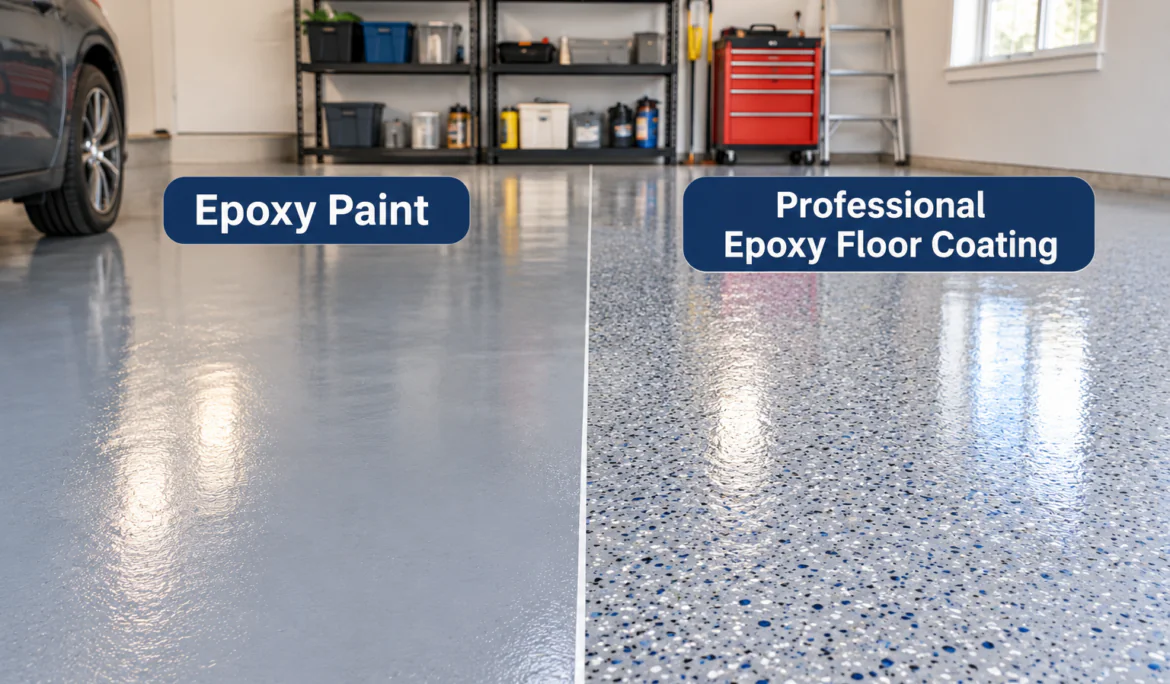
Epoxy paint and professional epoxy floor coatings are two different ways to improve the appearance and protection of concrete floors. The main difference is their composition, thickness, durability, and application process. Epoxy paint generally provides a thinner decorative layer for light-duty surfaces, while a professional epoxy floor coating system uses specialized materials and proper concrete preparation to create a thicker, more durable surface.
For homeowners in Buckeye looking to improve their garage floors, the choice depends on how much protection the concrete needs and how frequently the floor will be used. A painted garage floor may work for occasional use, but a professionally installed epoxy garage floor coating is generally a better option for areas exposed to vehicle traffic, oil spills, tire friction, and everyday wear. Understanding these differences can help you select a flooring solution that offers the right balance of appearance, performance, and long-term value.
What Is Epoxy Paint?
Epoxy paint is a surface coating designed to improve the appearance of concrete while providing a basic level of protection against everyday wear. Many products marketed as epoxy paint are water-based or acrylic paint formulations containing a small amount of epoxy resin or epoxy-modified ingredients. It is commonly used in residential garages, basements, storage areas, and utility rooms where the floor experiences relatively light foot traffic.
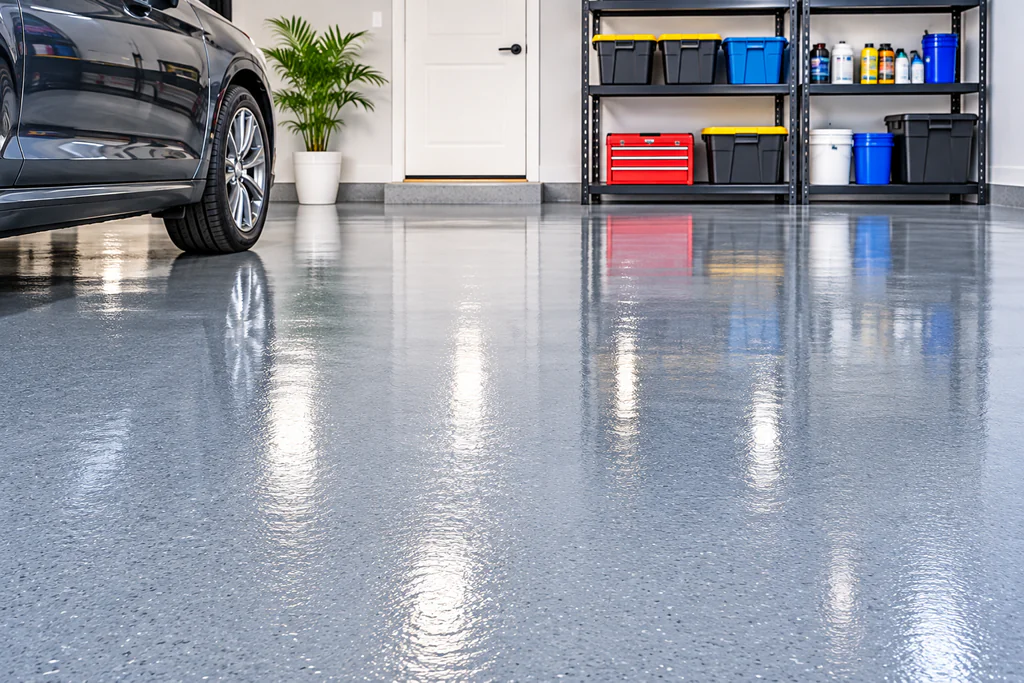
Epoxy paint is generally easier to apply than a professional coating system. Some products can be applied using a roller after basic cleaning and preparation. However, the quality of the finished surface depends on the product formulation and the condition of the concrete.
Common Characteristics of Epoxy Paint
- Thinner application: It generally creates a thinner surface layer than professional epoxy coating systems.
- Basic surface protection: It can help reduce direct exposure to dust, dirt, and minor spills.
- Simpler installation: Many products are suitable for DIY applications.
- Limited heavy-duty performance: Standard epoxy paint may not withstand frequent vehicle traffic, abrasion, or chemical exposure as effectively as industrial-grade coatings.
- Decorative improvement: It provides a cleaner, more uniform appearance for existing concrete.
Epoxy paint can be a practical choice for low-traffic spaces, but it may require more frequent maintenance or recoating when exposed to demanding conditions.
What Is Professional Epoxy Floor Coating?
A professional epoxy floor coating is a specialized flooring system made by combining epoxy resin and a compatible hardener. When these components are mixed, they undergo a chemical reaction that creates a hardened surface bonded to properly prepared concrete. Unlike ordinary floor paint, professional epoxy systems can include multiple layers, such as a moisture-control primer, 100% solid epoxy base coat, decorative flakes, and a protective topcoat. The specific combination depends on the floor’s condition, intended use, and performance requirements.
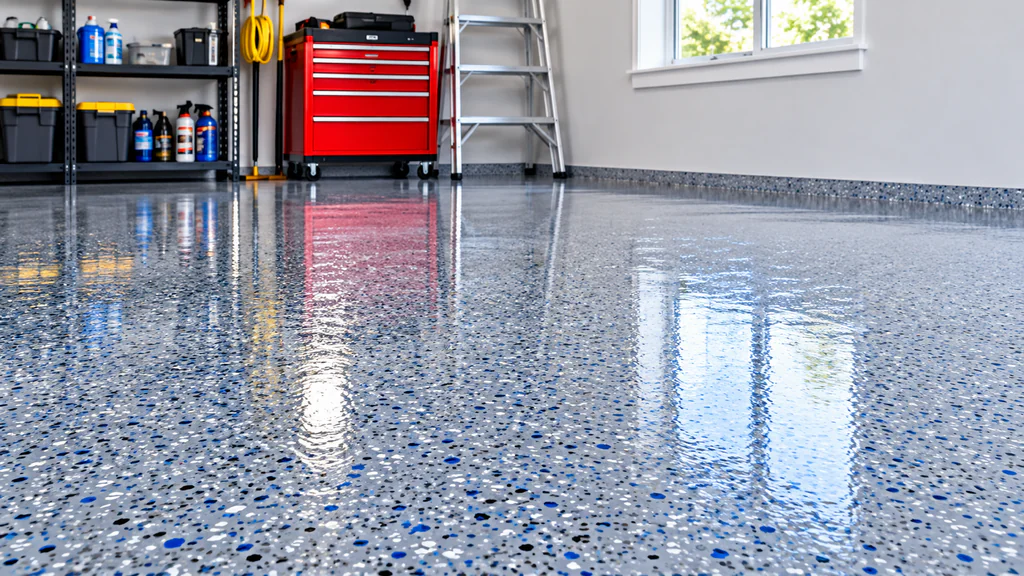
Important Features of Professional Epoxy Floor Coatings
1. Stronger Surface Bonding
Professional concrete floor preparation, including mechanical grinding, creates a suitable surface profile that helps the coating adhere to the concrete.
2. Greater Coating Thickness
Professional systems can build a thicker protective layer than ordinary epoxy paint. The actual thickness depends on the selected products and installation specifications.
3. Better Wear Resistance
Properly selected epoxy systems can withstand regular foot traffic, vehicle movement, and everyday surface abrasion.
4. Chemical and Stain Protection
Depending on the formulation, professional coatings can resist common garage contaminants, including oil, grease, and certain chemicals.
5. Multiple Design Options
Property owners can choose solid colors, decorative flakes, metallic finishes, and different levels of surface texture.
6. Protective Topcoats
A compatible polyaspartic or aliphatic polyurethane topcoat can provide additional protection against abrasion, stains, and UV-related discoloration.
These features make professional epoxy floor coating a suitable option for residential garages, workshops, warehouses, and commercial properties.
Key Differences Between Epoxy Paint and Professional Epoxy Floor Coating
Although both products are used on concrete, they are designed for different performance requirements. Epoxy paint primarily focuses on improving surface appearance, while professional epoxy systems are engineered to provide more substantial concrete protection.
1. Material Composition
Epoxy paint products can contain water-based or acrylic formulations with epoxy-modified components. Their composition varies depending on the manufacturer. Professional epoxy coatings typically use two-component resin and hardener systems. The chemical reaction between these materials creates a hardened coating with properties determined by the specific formulation.
2. Coating Thickness
Epoxy paint usually produces a relatively thin film that follows the existing concrete surface. Professional epoxy floor coating systems can be installed at greater thicknesses using multiple layers. This provides a more substantial protective surface, particularly when the floor requires additional resistance to everyday wear.
3. Surface Preparation
Paint products may require cleaning, light sanding, or other preparation specified by the manufacturer. Professional epoxy flooring generally requires more extensive concrete preparation. Mechanical grinding helps remove weak surface material, existing coatings, and contaminants while creating a suitable profile for adhesion.
4. Durability and Lifespan
Epoxy paint is generally better suited to areas with limited traffic and lighter use. Its performance can decline more quickly when exposed to frequent vehicle movement, abrasion, or harsh cleaning conditions. A properly installed professional epoxy system can provide longer-lasting performance, although its lifespan depends on product quality, preparation, installation, traffic, and maintenance.
5. Resistance to Stains and Chemicals
Basic epoxy paint can offer some protection against minor spills, but its resistance varies significantly by product. Professional epoxy systems are available with improved resistance to oil, grease, automotive fluids, and certain chemicals. The level of protection depends on the selected coating and its chemical resistance specifications.
6. Appearance and Finish Options
Epoxy paint usually offers a basic solid-color finish.
Professional epoxy flooring provides more design flexibility, including:
- Solid-color finishes
- Decorative flake systems
- Metallic epoxy designs
- Custom color combinations
- Textured and slip-resistant finishes
These options allow property owners to create a floor that matches the appearance and functional needs of their space.
7. Installation Process
Epoxy paint is often applied using a brush or roller and may be suitable for DIY projects. Professional epoxy coating installation involves concrete inspection, mechanical grinding, crack repairs where needed, primer application, coating installation, and protective finishing layers.
8. Maintenance Requirements
Both surfaces benefit from regular sweeping and cleaning. However, professional epoxy coatings are generally designed to handle more demanding environments. Their maintenance requirements depend on the coating system, traffic levels, and exposure to contaminants.
Epoxy Paint vs. Professional Epoxy Floor Coating: Comparison Table
| Comparison Factor | Epoxy Paint | Professional Epoxy Floor Coating |
| Material | Water-based, acrylic, or epoxy-modified formulations | Two-component epoxy resin and hardener |
| Thickness | Generally thinner | Available in thicker, multi-layer systems |
| Preparation | Basic cleaning or product-specific preparation | Mechanical grinding and detailed surface preparation |
| Durability | Suitable for lighter use | Designed for greater wear resistance |
| Vehicle Traffic | Product-dependent, often less suitable for heavy use | Suitable systems available for garage traffic |
| Chemical Resistance | Varies by formulation | Available with enhanced chemical resistance |
| Appearance | Mostly solid colors | Solid, flake, metallic, and custom finishes |
| Installation | Often DIY-friendly | Usually requires professional installation |
| Maintenance | Regular cleaning and possible recoating | Regular cleaning and system-specific maintenance |
| Initial Cost | Generally lower | Generally higher |
| Long-Term Value | Depends on maintenance and recoating frequency | Can offer better value in demanding environments |
Which Option Lasts Longer?
Professional epoxy floor coating generally lasts longer than standard epoxy paint when both are installed under comparable conditions and the coating system is appropriate for the intended use. Epoxy paint can lose its appearance or wear through when exposed to repeated tire movement, dropped tools, abrasive dirt, and frequent cleaning.
Professional epoxy systems are designed to provide a more substantial protective surface. Their durability depends on several factors:
- Quality of the epoxy materials.
- Condition and moisture level of the concrete.
- Proper mechanical surface preparation.
- Correct mixing and application.
- Appropriate protective topcoat.
- Frequency and type of floor usage.
For example, a garage in Buckeye that regularly accommodates vehicles may experience more wear than a storage room used occasionally. Choosing a coating system based on actual usage can help avoid premature surface deterioration.
Why Does Concrete Surface Preparation Matter?
Concrete preparation is one of the most important factors in determining how well a professional epoxy coating performs. Even high-quality epoxy materials may fail when applied over a dusty, contaminated, or poorly prepared surface. Mechanical concrete grinding removes weak surface material and creates a suitable texture for coating adhesion. It also helps expose areas that may require additional repairs before installation.
Important Surface Preparation Steps
1. Concrete Inspection: The installer checks for cracks, surface damage, existing coatings, and moisture-related concerns.
2. Mechanical Grinding: Specialized grinding equipment prepares the concrete and removes surface contaminants or weak material.
3. Crack and Damage Repairs: Visible cracks, holes, and damaged sections are evaluated and repaired using suitable materials.
4. Dust Removal: The prepared surface is thoroughly cleaned to remove grinding dust and loose particles.
5. Coating Application: The selected primer and epoxy coating layers are applied according to the manufacturer’s specifications.
Proper preparation helps create a consistent surface and reduces the risk of common coating problems such as peeling, bubbling, and premature separation.
Which Flooring Option Is Better for Arizona Garages and Commercial Spaces?
Buckeye’s hot summers, strong sunlight, dust, and seasonal weather conditions can create additional challenges for concrete floors.
The best flooring option depends on the property’s exposure, traffic, and intended use.
Residential Garages
For garages that regularly accommodate cars, motorcycles, tools, and household equipment, a professional epoxy garage floor coating is generally the more suitable choice. Hot vehicle tires can create friction and transfer heat to the floor. Lower-performance coatings may soften, mark, or lose adhesion under demanding conditions. A properly specified coating system with a compatible protective topcoat can provide better resistance to everyday garage wear.
Commercial Buildings and Workshops
Commercial floors often experience heavier traffic, equipment movement, chemical exposure, and frequent cleaning. Epoxy paint may not provide the level of protection required for these conditions. Professional commercial epoxy flooring systems can be selected according to the facility’s operating requirements. Businesses can also consider chemical-resistant finishes and slip-resistant additives where appropriate.
Areas Exposed to Direct Sunlight
Standard epoxy coatings can discolor or develop a yellowish appearance when exposed to prolonged UV radiation. For outdoor-adjacent spaces or areas receiving direct sunlight, a UV-resistant polyaspartic or aliphatic polyurethane topcoat may help improve color stability. The complete coating system should be selected based on the expected sunlight exposure and application environment.
When Should You Choose Professional Epoxy Floor Coating?
Choosing between epoxy paint and professional epoxy flooring depends on your expectations, budget, and how the concrete surface will be used.
Epoxy paint may be sufficient when:
- You want an affordable decorative improvement.
- The floor receives limited foot traffic.
- The area is primarily used for storage.
- Heavy equipment and vehicle movement are not expected.
- You are comfortable with potentially more frequent maintenance.
Professional epoxy floor coating is a better investment when:
- You want a durable garage floor surface.
- The concrete experiences regular vehicle traffic.
- The floor is exposed to oil, grease, and everyday spills.
- You need better abrasion and chemical resistance.
- You want decorative finishes with additional surface protection.
- The space is used for commercial or industrial activities.
For Buckeye homeowners and business owners, evaluating the concrete condition and expected floor usage before choosing a coating can help prevent unnecessary maintenance expenses.
Closing Thoughts
Epoxy paint and professional epoxy floor coating may look similar after application, but they offer different levels of protection and performance. Epoxy paint is generally suitable for basic decorative improvements and lighter-use areas, while professional epoxy systems provide more substantial protection for garages, workshops, and commercial floors.
The right choice depends on your budget, concrete condition, traffic levels, and long-term expectations. If you need a floor that can handle regular vehicle movement, everyday spills, and demanding use, a professionally installed epoxy system is generally worth considering. NLKD Concrete Coatings is worth considering for property owners in Buckeye looking for professional epoxy floor coating solutions tailored to their concrete condition and usage requirements.
For property owners planning concrete floor improvements in Buckeye, understanding the differences between these products is the first step toward choosing a suitable flooring solution. Consulting an experienced coating professional can also help you select the right system for long-term floor protection.
Frequently Asked Questions
No. Epoxy paint is generally a thinner decorative product, while professional epoxy floor coating uses specialized resin and hardener formulations to create a more substantial protective surface.
Professional epoxy coating is generally better for garages, workshops, and commercial spaces that experience regular traffic, abrasion, and spills.
Yes. Epoxy paint can be used on garage floors, but its suitability depends on the product specifications and expected vehicle traffic.
Thickness varies depending on the selected system. Multi-layer systems can provide considerably more coating thickness than standard epoxy paint.
It can peel when applied over dirty, damp, contaminated, or improperly prepared concrete.
Concrete grinding removes weak surface material and creates a suitable surface profile that helps the epoxy coating bond with the concrete.
A properly selected and installed garage coating system can withstand normal vehicle traffic and associated tire exposure. Performance depends on the materials and installation quality.
Epoxy paint generally has a lower initial material and installation cost. Professional epoxy systems cost more because they involve specialized materials, preparation, and application.
Its lifespan depends on the coating system, concrete preparation, traffic levels, installation quality, and maintenance.
Some epoxy paint products offer basic oil resistance, but their performance varies. Professional epoxy systems can provide greater resistance when the appropriate formulation is selected.
Yes. Professional commercial epoxy flooring is commonly used in warehouses, workshops, retail spaces, and other facilities requiring durable concrete surfaces.
Yes, provided the concrete is structurally sound and properly prepared according to the manufacturer’s instructions.
Yes. Options include solid colors, decorative flakes, metallic finishes, and custom color combinations.
Many professional epoxy systems are designed for frequent foot traffic. The appropriate system depends on the expected level of use.
High temperatures can affect coating installation and curing. Prolonged UV exposure can also cause discoloration in some epoxy systems.
Certain professional epoxy formulations provide resistance to oils, grease, and specific chemicals. Always check the manufacturer’s chemical resistance specifications.
Sometimes, the existing paint must be evaluated for adhesion and compatibility. Removing unsuitable coatings may be necessary before installation.
Smooth epoxy surfaces can become slippery when wet. Anti-slip aggregates and textured finishes can improve traction.
Regular sweeping, mopping with a suitable cleaner, and promptly removing spills help maintain the coating’s appearance and performance.
Choose professional epoxy flooring when your concrete needs better protection against vehicle traffic, abrasion, stains, and frequent use.