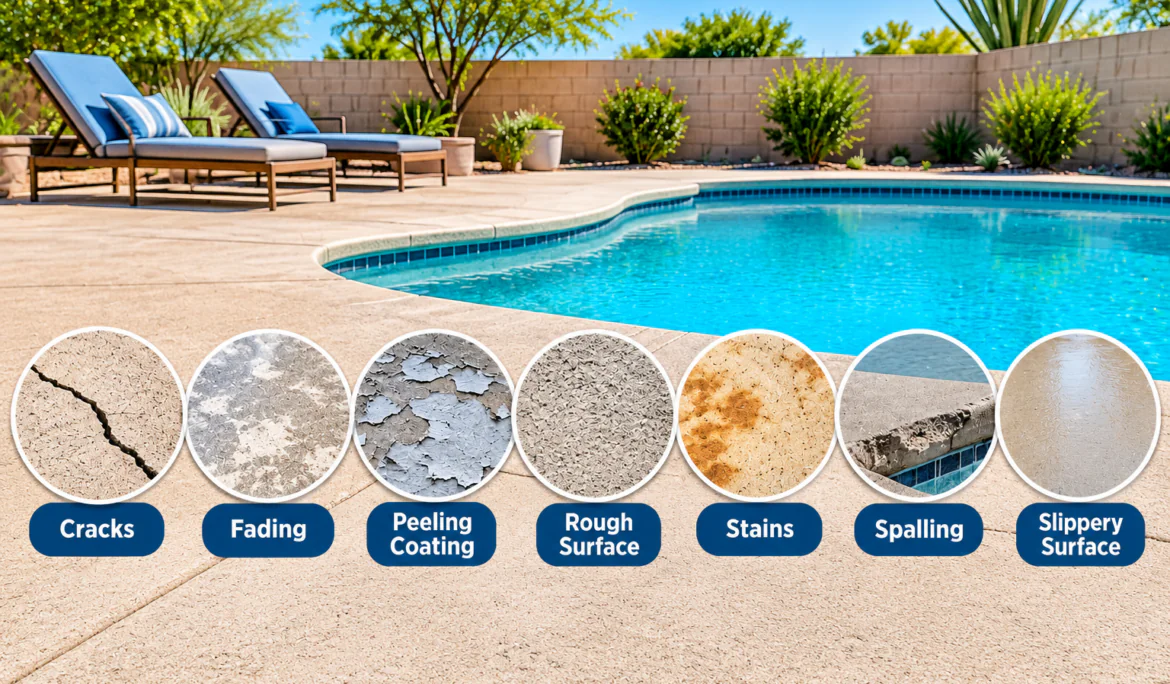
A concrete pool deck can gradually lose its appearance and functionality because of constant sunlight, moisture, pool chemicals, temperature changes, and regular foot traffic. Cracks, fading, peeling coatings, rough textures, and surface deterioration are common signs that your pool deck may need resurfacing. Identifying these problems early helps homeowners determine whether repairs and a new surface finish can restore the existing concrete or whether more extensive work is necessary. Understanding these warning signs can help you choose the right pool deck restoration approach before minor surface issues become bigger concerns.
1. Visible Cracks Across the Concrete Surface
Cracks are among the most noticeable signs of deterioration in an aging concrete pool deck. They can develop because of concrete shrinkage, temperature fluctuations, ground movement, or changes in the underlying support. Small hairline cracks may initially appear harmless, but they should be monitored to determine whether they are spreading or becoming wider. Water can enter these openings, potentially contributing to further deterioration, especially when other concrete or drainage problems are present. Before considering pool deck resurfacing, identify the type and extent of cracking. Minor, stable cracks may be suitable for professional repair before applying a compatible resurfacing material. However, wide, expanding, or structural cracks require further evaluation to determine their underlying cause.
2. Fading and Discoloration From Sun Exposure
Outdoor concrete surfaces receive prolonged sunlight throughout the year. In hot climates like Buckeye, intense UV exposure can gradually affect decorative finishes, coatings, and sealers. Fading and discoloration can make an otherwise functional pool deck look old and poorly maintained. You might notice uneven coloring, faded decorative patterns, or areas that look noticeably different from the surrounding concrete.
Several factors can contribute to these changes:
- Prolonged exposure to direct sunlight.
- Aging or deteriorating protective sealers.
- Pool chemical residue and cleaning products.
- Weather exposure and inconsistent maintenance.
A suitable acrylic pool deck coating or decorative concrete overlay can refresh the appearance of an existing surface when the concrete is in appropriate condition. Choosing a finish designed for outdoor exposure is important for maintaining its appearance over time.
3. Peeling, Flaking, or Deteriorating Coatings
If your existing pool deck coating begins peeling, blistering, or flaking, it may indicate an adhesion or moisture-related problem. These issues can develop when the original coating was installed over an improperly prepared surface or when incompatible materials were used. Other contributing factors include prolonged weather exposure, trapped moisture, and deterioration of the existing coating system.
Look for these warning signs:
- Coating material separating from the concrete.
- Small flakes appear across the walking surface.
- Bubbles or blisters beneath the finish.
- Exposed concrete in previously coated areas.
Applying another coating directly over a failing finish is not always the right solution. The existing material should be evaluated, and loose or incompatible coatings may need to be removed before installing a new system. Proper preparation helps create a suitable surface for the next application and reduces the risk of recurring coating problems.
4. Rough, Worn, or Uncomfortable Walking Areas
A pool deck should provide a comfortable walking surface for people moving between the swimming pool, patio, and outdoor living areas. However, aging concrete and deteriorating coatings can create rough patches, exposed aggregate, and uneven textures. These conditions may become particularly noticeable when walking barefoot around the swimming pool. Surface wear can result from years of foot traffic, weather exposure, previous coating failure, or deterioration of the concrete’s upper layer. Resurfacing with a suitable textured finish may help restore the appearance and improve surface consistency. Homeowners can also explore coating systems designed for poolside applications that incorporate slip-resistant additives. However, slip resistance depends on the complete surface system, texture, cleaning, and wet conditions. A textured finish should be selected with both barefoot comfort and intended use in mind.
5. Surface Pitting, Chipping, and Concrete Deterioration
Small holes, chipped edges, and deteriorating concrete patches are additional problems that may indicate the need for pool deck repair or resurfacing. Surface pitting occurs when small portions of the concrete’s upper layer break away, leaving visible holes or rough areas. Chipping can also develop around edges, joints, and previously damaged sections.
These problems may be associated with:
- Aging concrete and surface wear.
- Moisture penetration.
- Improper installation or finishing.
- Environmental exposure.
- Previous repairs that have deteriorated.
Minor surface imperfections may be corrected through suitable patching and resurfacing materials. However, deeper deterioration or damage extending into the concrete structure may require more extensive repairs or replacement. A professional inspection helps determine whether the existing concrete can support a new decorative finish.
6. Water Pooling or Drainage-Related Problems
Standing water around a swimming pool is another issue homeowners should not overlook. Although occasional water accumulation may result from splashing or recent cleaning, persistent pooling can indicate an underlying drainage or surface grading problem. Look for areas where rainwater repeatedly collects instead of draining away from the pool deck.
Potential contributing factors include:
- Improper concrete slope.
- Uneven or settled sections.
- Drainage system problems.
- Cracks that allow water to enter the concrete.
- Surface irregularities that interrupt water movement.
Before installing a new pool deck coating, these conditions should be evaluated. Applying a decorative overlay alone will not necessarily correct an underlying grading or drainage issue. Addressing water management before resurfacing helps create a more suitable foundation for the selected coating system.
7. An Outdated Pool Deck That No Longer Meets Your Needs
Not every pool deck renovation begins with severe concrete damage. Sometimes, the existing surface remains functional but no longer matches the appearance or design of the outdoor space. Older decorative finishes, faded colors, outdated patterns, and worn sealers can make a backyard look less inviting.
Homeowners planning an outdoor upgrade may consider several options:
- Acrylic pool deck coatings: Add color and texture to suitable existing concrete.
- Decorative concrete overlays: Create updated patterns and finishes over properly prepared surfaces.
- Textured concrete finishes: Introduce surface variation for poolside applications.
- Concrete staining and sealing: Refresh the appearance of suitable concrete with decorative color and a compatible protective finish.
These options allow homeowners to explore different pool deck renovation ideas without automatically committing to complete concrete replacement.
Can Your Existing Pool Deck Be Resurfaced Instead of Replaced?
In many cases, an existing concrete pool deck can be resurfaced if the underlying slab remains structurally sound. Resurfacing is generally considered when the concrete has cosmetic imperfections, minor repairable cracks, fading, or deteriorating surface finishes. After the necessary repairs and preparation, a compatible coating or decorative overlay can create a refreshed surface. However, resurfacing may not be appropriate when the concrete has significant structural cracks, extensive movement, severe deterioration, or unresolved drainage problems. The decision depends on the condition of the existing slab, the cause of the damage, and the requirements of the selected resurfacing system. A professional assessment can help determine whether restoration or replacement is the more suitable approach.
What Happens During a Professional Pool Deck Resurfacing Project?
A successful pool deck resurfacing project involves more than simply applying a new coating. Proper preparation and material compatibility are essential parts of the process.
A typical project includes:
- Concrete inspection: Evaluate cracks, surface deterioration, existing coatings, and moisture-related concerns.
- Surface cleaning: Remove dirt, dust, oils, and other contaminants.
- Coating removal: Remove loose or incompatible existing finishes when necessary.
- Concrete preparation: Use appropriate grinding or preparation methods to establish the required surface profile.
- Surface repairs: Address suitable cracks, chips, and imperfections.
- Material application: Apply compatible primers, resurfacing materials, and decorative finishes.
- Curing: Allow the installed system to cure according to manufacturer specifications before reopening the area.
The exact process varies depending on the existing concrete and the selected coating system.
Give Your Pool Deck the Attention It Needs
Cracks, fading, peeling coatings, rough textures, surface pitting, drainage concerns, and outdated finishes can all indicate that your pool deck needs attention. Recognizing these problems helps homeowners determine whether repairs, resurfacing, or complete replacement is the most appropriate solution.
For property owners considering pool deck restoration in the Buckeye, NLKD Concrete Coatings provides residential and commercial concrete coating solutions, including acrylic pool deck resurfacing and decorative concrete finishes. With more than 15 years of industry experience, the company helps homeowners explore options for improving the appearance and functionality of existing concrete surfaces.
The first step is understanding your pool deck’s condition and choosing a resurfacing system suited to its specific requirements.
Frequently Asked Questions About Pool Deck Resurfacing
Common signs include visible cracks, fading, peeling coatings, rough textures, surface pitting, and worn decorative finishes. A professional inspection can determine whether resurfacing is appropriate.
Cracks can develop because of concrete shrinkage, temperature fluctuations, ground movement, settlement, or improper installation. The cause and severity should be evaluated before resurfacing.
Yes, minor and stable cracks can often be repaired before applying a compatible resurfacing system. Significant structural cracks may require more extensive repairs.
There is no fixed resurfacing schedule. The timing depends on the concrete condition, coating type, installation quality, climate exposure, and maintenance.
Pool deck repair addresses specific problems such as cracks, chips, and damaged areas. Resurfacing applies a new finish over suitable existing concrete to improve its appearance and surface condition.
Acrylic coatings formulated for outdoor concrete are popular for pool deck applications. They offer different colors and textures and can be selected for the specific requirements of poolside surfaces.
Yes. If the existing slab is structurally sound, a compatible decorative overlay or coating may restore its appearance without requiring complete concrete replacement.
Peeling can result from poor surface preparation, moisture problems, incompatible materials, improper application, or aging. The underlying cause should be addressed before installing another coating.
Sunlight, UV exposure, pool chemicals, weather conditions, aging sealers, and inconsistent maintenance can contribute to fading and discoloration.
Yes. Decorative concrete overlays, acrylic coatings, and suitable staining systems can refresh faded concrete with updated colors, textures, and finishes.
The best option depends on the existing concrete, climate, desired appearance, surface texture, and maintenance requirements. Acrylic pool deck coatings and suitable decorative overlay systems are common choices.
Project duration depends on the deck’s size, surface condition, repairs, material selection, weather, and curing requirements. A contractor can provide a realistic schedule after inspecting the area.
Resurfacing can improve suitable rough or deteriorating concrete by creating a more consistent finish. The selected material and texture should be appropriate for barefoot poolside use.
Yes. Decorative overlays can be installed over suitable existing concrete after proper cleaning, repairs, and surface preparation. The slab must meet the overlay manufacturer’s requirements.
Standing water may result from improper slope, uneven concrete, settlement, or drainage problems. These conditions should be evaluated before resurfacing because a new coating alone may not correct them.
Resurfacing may be more suitable when the existing concrete is structurally sound and mainly has surface-level problems. Replacement may be necessary when there is extensive structural damage or significant concrete movement.
Consider a coating system designed for poolside applications with an appropriate textured finish or manufacturer-approved slip-resistant additive. Regular cleaning and maintenance are also important.
Yes. Prolonged UV exposure and high temperatures can affect certain coatings, sealers, and decorative finishes. Selecting materials formulated for outdoor exposure is important.
Regularly remove dirt and debris, clean the surface with manufacturer-approved products, address spills, inspect for damage, and follow recommended resealing and maintenance schedules.
Choose a licensed, insured contractor with pool deck resurfacing experience. NLKD Concrete Coatings offers professional pool deck resurfacing solutions.