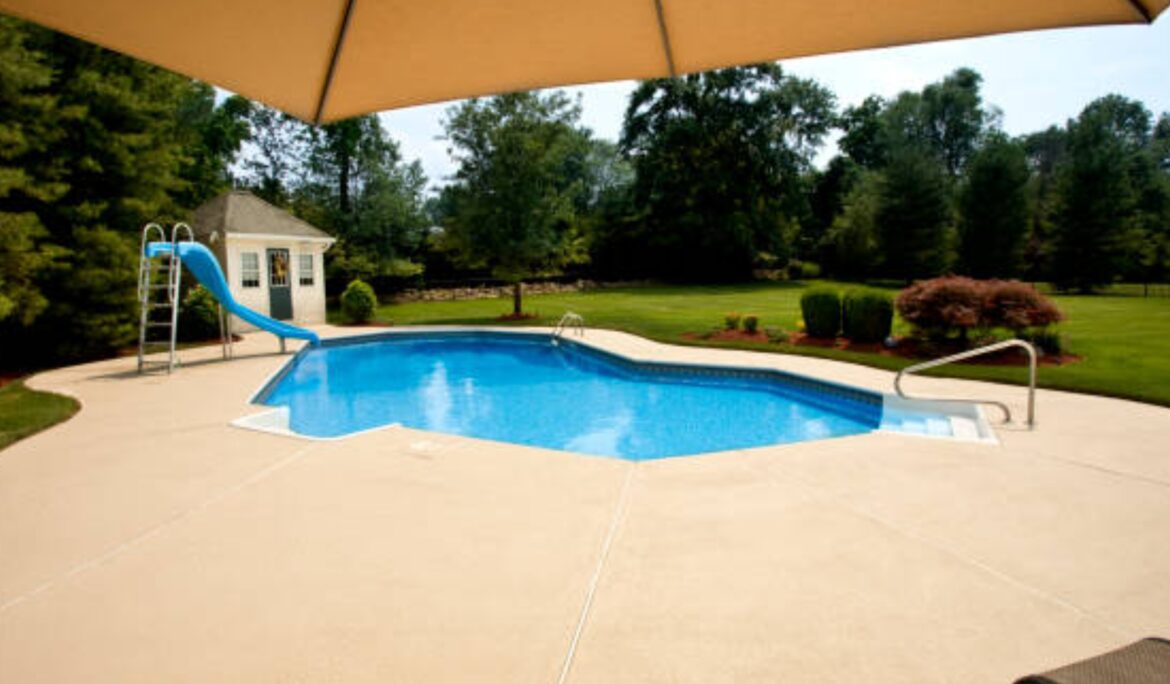
Acrylic pool deck resurfacing will refinish an appropriate existing concrete surface, and concrete replacement will remove the existing concrete and replace it with new concrete. It will vary based on the condition of the pool deck, the type of damage, the looks you want to achieve and the project requirements.
Pool decks are exposed to temperature fluctuations, foot traffic, pool chemicals, water, and sunlight all the time. As time passes, a concrete pool deck can become faded, stained, rough, cracked, or worn. If it is occurring, homeowners may want to seriously think about pool deck resurfacing or even replacing their pool. It is important to know the difference between these two choices, so you can choose which works best for your pool space.
What Is Acrylic Pool Deck Resurfacing?
Acrylic pool deck resurfacing is the procedure of restoring surfaces of existing concrete to give them a new look. The surface is cleaned, pretreated and repaired when necessary, followed by an overcoat of acrylic based system. Acrylic concrete resurfacing can be used on existing concrete slabs that are structurally sound without removing the original slab.
Acrylic pool deck coatings can provide the following:
- A refreshed pool deck appearance
- New colors and decorative textures
- Improved resistance to everyday wear
- A more consistent surface
- Slip-resistant texture options
- Protection for suitable existing concrete
This solution is typically suggested if the existing concrete pool deck is sound, but it is outdated.
What Is Concrete Replacement?
Concrete replacement is a large-scale construction activity. The existing concrete is removed, the sub-base is prepared and a new concrete slab is laid. If there are significant structural issues with a pool deck that cannot be reasonably repaired with a surface treatment, then replacement may be considered.
This process can take place in the following stages:
- Removing the existing concrete
- Preparing the underlying base
- Installing new concrete
- Allowing the concrete to cure
- Applying a desired finish or protective treatment
Concrete pool deck replacement typically requires a lot more demolition and construction than concrete pool resurfacing because the old slab will need to be removed.
Acrylic Resurfacing vs. Concrete Replacement
| Factor | Acrylic Pool Deck Resurfacing | Concrete Replacement |
| Existing concrete | Uses suitable existing concrete | Removes existing concrete |
| Main purpose | Renews the surface | Rebuilds the slab |
| Demolition | Usually limited | Requires concrete removal |
| Appearance | Colors and textures can be added | New concrete can have various finishes |
| Project scope | Generally less extensive | More construction-intensive |
| Structural damage | Not designed for major structural problems | Can address problems requiring a new slab |
| Customization | Multiple texture and color options may be available | Depends on selected concrete finish |
| Best suited for | Worn but suitable concrete | Severely damaged or compromised concrete |
When Is Acrylic Pool Deck Resurfacing a Good Option?
If the concrete in your pool has overall stability but minor issues at the surface, then you can think about acrylic pool deck resurfacing.
Common examples include:
- Faded concrete
- Surface discoloration
- Minor surface wear
- An outdated appearance
- Small surface imperfections
- A desire for a new color or texture
- Poolside concrete that needs a refreshed finish
The contractor who is to resurface a pool deck should inspect the existing surface to decide on the recommended system to use for resurfacing. Resurfacing may be beneficial to those homeowners who wish to enhance the look of their pool area, but not remove an otherwise acceptable concrete slab.
When Might Concrete Replacement Be Necessary?
In cases of extensive structural damage to the pool deck, it may be more suitable to replace the concrete.
Examples can include:
- Severe cracking
- Major settlement
- Significant movement
- Large sections of damaged concrete
- Serious drainage-related problems
- A compromised underlying base
For some minor problems, a concrete pool deck repair might be viable, but resurfacing is not a solution for major structural issues. Acrylic resurfacing is a new surface that is placed over the existing concrete surface. Does not make severely unstable concrete structurally sound.
How Does Pool Deck Resurfacing Cost Compare With Replacement?
The price for pool deck resurfacing varies based on the number of square feet, the condition of the deck, the work that needs to be done to get it ready, if any, deck repairs, materials, labor, design selections, and site conditions.Partially replacing the concrete with acrylic may require less demolition and construction than total replacement. The actual project price will vary depending on the type of pool deck.When considering pool deck resurfacing vs. replacement, homeowners need to consider the total job, not just the cost of the materials.
Why Is Surface Preparation Important?
One of the most crucial aspects of an acrylic pool deck resurfacing project is proper preparation.
Before applying the new system, the existing surface may need to be:
- Thoroughly cleaned
- Mechanically prepared
- Repaired where appropriate
- Checked for weak or damaged areas
- Properly dried
- Prepared for proper material adhesion
The resurfacing system can prepare the existing concrete for good bonding. A concrete resurfacing business expert needs to determine what issues are happening on the surface before putting on the new surface.
Can Acrylic Resurfacing Change the Look of a Pool Deck?
Yes. Acrylic Pool Deck Resurfacing can also be used to give a facelift to pre-existing concrete.
Homeowners can choose from a variety of:
- Colors
- Textures
- Patterns
- Decorative finishes
- Slip-resistant surfaces
Here are some options that can help make a pool deck more suitable for the outdoor environment. Homeowners who are considering decorative pool deck resurfacing have a choice of decoration patterns that will be dependent on the current concrete surface and the type of resurfacing system used.
Can Acrylic Pool Deck Resurfacing Improve Safety?
Texture or aggregate options can be part of a resurfacing system to enhance traction around the pool.Because pool decks regularly become wet, slip-resistant pool deck coatings can be an important consideration. The specific traction properties, however, are a function of the product, texture, installation and surface conditions.The aim is to provide a surface for a swimming pool that is functional for general use and has the desired look.
How Does Resurfacing Handle Outdoor Conditions?
Pool decks are subject to sunlight, water, changing temperatures and foot traffic.Maintenance, environmental conditions, installation, surface preparation and the product system determine the performance of an acrylic pool deck coating.The coating system selected for exterior concrete may be a way to help make sure the material is right for the job.
Does Resurfacing Fix Every Crack?
Not all concrete cracks can be resolved with acrylic pool deck resurfacing.Some minor surface defects might be fixed during preparation. If there are larger cracks, settlement, movement or structural issues, they should be examined more closely.When the concrete is moving, a new surface will not solve the problem.That’s why it’s important to have an inspection prior to deciding to install pool deck concrete resurfacing or replacement.
Which Option Requires More Construction?
The majority of the time, Concrete Replacement requires more construction since the current slab needs to be demolished and eliminated from the scene prior to the installation of fresh concrete. Acrylic resurfacing is used with the existing concrete, provided that it is suitable for the process. This can minimise the need for demolition work.
While it is true that project time can differ depending on:
- Pool deck size
- Surface preparation
- Required repairs
- Weather conditions
- Selected materials
- Installation requirements
How Do You Choose Between Resurfacing and Replacement?
The first step is to inspect the existing concrete.In cases where the slab is structurally sound but might appear worn, stained, faded or out-of-date, acrylic pool deck resurfacing could be a good option to consider.In cases where the concrete is in poor condition due to potential structural damage, settlement or extensive damage, replacement may be a consideration.
A professional inspection can assist to identify:
- The severity of cracks
- Surface condition
- Drainage concerns
- Signs of settlement
- Areas requiring repair
- Whether the existing concrete is suitable for resurfacing
The best approach should be based on the actual condition of the pool deck rather than appearance alone.
Closing Thoughts
Acrylic pool deck resurfacing is to be used on an existing pool deck to restore the concrete to a usable condition, and concrete replacement is where the existing concrete is removed and a new concrete slab is poured. If the concrete is deemed appropriate for reuse, resurfacing can restore the deck’s look, feel, and surface value. If you have a large structural issue with your pool deck, concrete replacement is an option to consider. Have the current surface assessed before deciding on pool deck resurfacing vs concrete replacement. Knowing about the condition of the concrete will enable you to choose an approach that is suitable for your pool deck design, your goals and the project’s requirements.
FAQs About Acrylic Pool Deck Resurfacing
It is a surface-renewal process that applies an acrylic-based coating or overlay system to suitable existing concrete.
No. Resurfacing renews existing concrete, while replacement removes the old slab and installs new concrete.
Depending on the surface condition and selected system, certain minor imperfections may be addressed during preparation.
No. Major cracking, settlement, or structural movement may require repairs or concrete replacement.
Yes. Many acrylic pool deck coatings offer different color, texture, and decorative finish options.
Generally, yes. Replacement requires demolition and removal of the existing concrete before new concrete is installed.
Project time varies according to deck size, preparation, repairs, weather, and the selected resurfacing system.
Yes. An inspection can help determine whether the existing concrete is suitable for resurfacing.
No. The existing concrete needs to be sufficiently stable and suitable for the selected resurfacing system.
Deck size, surface condition, repairs, preparation, materials, design choices, labor, and site conditions can all affect project cost.
The lifespan depends on the product, installation quality, weather exposure, foot traffic, and regular maintenance.
It can be suitable for older concrete if the existing slab is stable and has enough structural integrity for resurfacing.
Yes. A new acrylic finish can refresh faded concrete with updated colors, textures, and decorative options.
Certain exterior resurfacing systems are designed to improve the surface of outdoor concrete and may offer finishes intended for hot pool deck environments.
No. When the existing concrete is suitable, acrylic resurfacing is applied over the prepared surface rather than removing the entire slab.
Surface preparation can address certain stains and contaminants before resurfacing, although severe or deep staining may require additional treatment.
Regular sweeping, cleaning, prompt removal of spills, and following the coating manufacturer’s maintenance recommendations can help preserve the surface.
Yes. Acrylic resurfacing systems can be designed for exterior pool deck applications when the existing concrete and selected product are suitable.
Look for experience with concrete surface preparation, exterior resurfacing systems, repairs, and pool deck applications. Ask about the preparation process and materials being used.
The answer depends on the type and severity of the cracking, along with the overall condition and stability of the concrete. A professional assessment can help determine which approach is appropriate.