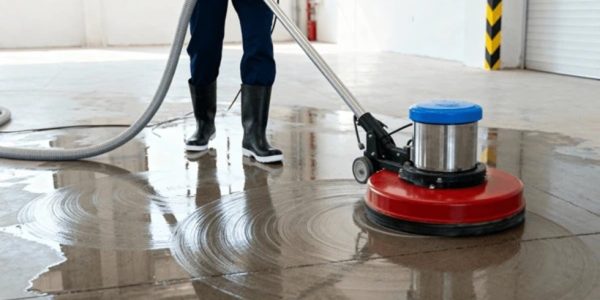
Concrete surface grinder helps to prepare the floor surface for the new flooring by removing old coating, paint, adhesives, sealers and surface contaminants, and provides a clean, even floor profile for the new floor. The right preparation is essential for good bonding and performance of epoxy, polyaspartic, and concrete sealers and other coating systems. Concrete floors can get rough, stains, old coatings, adhesive residue and other surface issues. When preparing the floor for a new finish, simply cleaning the floor may not be sufficient. Many concrete surfaces can be prepared more thoroughly by mechanical grinding.A commercial concrete grinder can be used for larger commercial and industrial floors to prepare large areas efficiently while ensuring the surface profile is uniform.
What Is a Concrete Surface Grinder?
A concrete surface grinder is a specialized machine that is used to mechanically prepare concrete floors. It is a process that removes unwanted surface materials from the surface using rotating abrasive or diamond tooling to provide the desired surface profile.
Grinding can aid in the removal of:
- Old epoxy coatings
- Paint
- Concrete sealers
- Adhesive residue
- Surface contaminants
- Loose surface material
- Rough areas
- Minor surface imperfections
Concrete grinding is typically performed when preparing a surface for epoxy flooring, polyaspartic coatings, concrete sealers, overlays and other floor systems. The size and type of the grinder will be determined by the condition and size of the concrete floor.
Why Is Concrete Floor Preparation Important?
Proper preparation is one of the most important steps in a concrete coating project.To ensure good adhesion, a coating requires a clean, sound and properly profiled concrete surface. Dust, oil and grease, old coatings or poor surface material can reduce adhesion if it is not removed below the coating.
This may contribute to problems such as:
- Peeling
- Flaking
- Blistering
- Delamination
- Uneven coating performance
- Premature wear
Many of these surface conditions can be improved or resolved through grinding before the new flooring system is installed. A well-prepared floor will create a stronger base for the final finish.
How Does a Concrete Surface Grinder Improve Floor Preparation?
1. Removes Old Coatings
Over time, old epoxy, paint, sealers, and other coatings may wear out and become damaged. Coating over an existing coating that is failing can cause adhesion issues because the new layer of coating may adhere to the old coating instead of to the concrete. A concrete surface grinding machine may successfully remove the old coating materials and expose the concrete below. This leaves behind a cleaner surface for the next flooring system.
2. Creates a Consistent Surface Profile
The surface of the concrete should be suitably profiled to ensure good adhesion of the coating. Grinding is a process that takes a controlled amount of surface material and gives the job a textured surface. This provides coating materials with a surface to which they can mechanically adhere. The exact profile required depends on the type of coating and manufacturer’s specifications.
A consistent profile can be particularly important for:
- Epoxy flooring
- Polyaspartic coatings
- Industrial coatings
- Concrete sealers
- Protective floor systems
3. Removes Surface Contaminants
Oil and grease, dirt, adhesives, chemicals, and other contaminants can be found on concrete floors.Commercial and industrial floors can be exposed even further from vehicles, machinery, equipment and heavy traffic.Grinding can be used to remove contaminated surface material and prepare the concrete ready for further cleaning and coating.
4. Smooths Rough Surface Areas
Not all concrete surfaces are smooth. It can help to make the surface smoother if there are any rough spots or minor surface irregularities, prior to coating. But grinding is not a solution to all concrete issues. If the cracks are deep, the settlement is great, and the structure is damaged, it needs to be repaired separately.
5. Removes Adhesives and Paint
Floors that had tile, carpet, vinyl or other flooring before may still have adhesive residue on the surface of the concrete floor. Paint can also provide a barrier between the concrete and a new coating. A concrete surface grinder can mechanically remove a number of surface residues and prepare the floor for the next system of flooring.
6. Helps Improve Coating Adhesion
The coatings require a suitable surface, which is why mechanical surface preparation is important. Grinding can be used to remove weak surface material and contaminants, and can provide the desired surface texture for mechanical adhesion. This can contribute to coating longevity when used in conjunction with the following corrective measures: cleaning, repair, quality materials and professional installation.
Concrete Surface Grinder vs. Commercial Concrete Grinder
The size and condition of a floor and its preparation needs will determine the equipment that’s required for a project.
Depending on the project size and the requirements of the job, a smaller concrete surface grinder may be more appropriate for smaller floor areas or for commercial applications that are not as demanding.
| Project Requirement | Concrete Surface Grinder | Commercial Concrete Grinder |
| Small concrete areas | Suitable | Suitable |
| Garage floor preparation | Suitable | Suitable |
| Large commercial floors | May require more time | Highly suitable |
| Heavy coating removal | Depends on equipment | Well suited |
| Warehouse floors | Project dependent | Highly suitable |
| Industrial floor preparation | Depends on machine | Often preferred |
| Extensive surface preparation | Project dependent | More efficient |
| Large open floor areas | May require more passes | Designed for higher productivity |
The appropriate equipment should be used depending on the condition of the concrete and the flooring system to be installed after the concrete. .
Concrete Surface Grinder vs. Other Prep Methods
Concrete grinding is not the only way to prepare a concrete floor. Other techniques are acid etching, shot blasting, pressure washing and scarification.
Each method of preparation may have its own pros and cons and uses.
| Preparation Method | Speed | Surface Profile Quality | Dust / Cleanup Control | Best For |
| Concrete surface grinder | Fast | Excellent and consistent | Good with vacuum attachment | Epoxy coatings, concrete coatings, polishing |
| Acid etching | Slow | Inconsistent | Poor; chemical runoff can be an issue | Light residential surface preparation |
| Shot blasting | Fast | Excellent and aggressive | Good with proper equipment | Thick industrial coatings and large floors |
| Pressure washing alone | Fast | Poor; surface-level only | Minimal dust, but water cleanup required | Cleaning, not primary bonding preparation |
| Scarifying | Moderate | Very aggressive | Poor without proper dust control | Removing thick coatings, high spots, and damaged concrete |
Why Is a Concrete Surface Grinder Often Preferred?
A concrete surface grinder is a helpful combination of speed, surface control and consistent preparation. Diamond grinding tools are used to get rid of unwanted materials and to establish a controlled profile for the next flooring system. A commercial concrete grinder can assist in preparing larger areas efficiently for large commercial projects. But the best preparation technique is determined by project requirements. Depending on the size of the industrial floors, shot blasting may be suitable, and scarifying may serve when deeper material or bumps must be removed. Acid etching or pressure washing are techniques that may have specific uses but typically do not offer the same mechanical surface profile as a professional grinding.
What Materials Can a Concrete Surface Grinder Remove?
The concrete surface grinder can solve some common surface materials and conditions.
- Old Epoxy: Yes — Helps remove existing epoxy coatings from the concrete surface.
- Paint: Yes, Helps to strip paint and other surface coatings.
- Concrete Sealer: Yes — Removes existing sealers, and prepares surface for recoating.
- Adhesive Residue: Often — Helps remove flooring adhesive and other residue.
- Surface Contamination: Yes — Helps to remove contaminated or affected surface material.
- Rough Concrete: Yes — Helps refine rough areas and create a more consistent surface.
- Minor Surface Imperfections: Yes — Assists in the uniformity of the surface before coating.
- Loose Surface Material: Yes — Loose and weak material is removed from the concrete surface.
- Deep Structural Cracks: No — These are generally best repaired with separate concrete repair prior to grinding or coating.
- Major Concrete Settlement: No — There will typically need to be corrective concrete or structural work done to fix a major concrete settlement.
The condition of the concrete should be assessed prior to selecting the appropriate preparation method.
How Does a Commercial Concrete Grinder Help Large Projects?
The area of many commercial floors is measured in thousands of square feet. Making these areas by hand can be time consuming and results could be irregular. A commercial concrete grinder will be able to prepare larger areas and more difficult surfaces.
It can be useful for:
- Warehouses
- Retail facilities
- Manufacturing buildings
- Commercial garages
- Automotive facilities
- Restaurants
- Distribution centers
- Industrial facilities
- Large office buildings
Proper use of appropriate commercial machinery can enhance productivity and contribute to surface control.
Why Is Dust Control Important During Concrete Grinding?
Fine dust can be produced when grinding concrete. Dust may be dispersed over the entire working area and increase the clean up task if not controlled. Professional grinding equipment can be combined with vacuum and dust-collection equipment.
The following measures may be helpful for dust control:
- Reduce airborne dust
- Keep the work area cleaner
- Improve visibility
- Make cleanup easier
- Protect surrounding areas
- Improve the overall preparation process
Dust management is particularly crucial when the building is occupied in other parts while the project is ongoing in another part of the building.
Does Concrete Grinding Damage Concrete?
Concrete grinding, when properly executed, using a proper tool and equipment is a controlled preparation process. The purpose is to strip away necessary material and to prepare the concrete for the next flooring system.
Determination of the amount of grinding required may depend on:
- Existing coating thickness
- Concrete condition
- Surface contamination
- Required surface profile
- Type of coating
- Overall floor condition
The right equipment and grinding tools can minimize unnecessary concrete removal to obtain the proper preparation.
Is Grinding Required Before Epoxy Flooring?
Depending on the existing concrete and material to be applied, mechanical preparation can be a crucial aspect of the epoxy flooring installation. Grinding can be used to remove existing coatings and provide the required surface profile for good adhesion.The concrete must be prepared, cleaned and inspected before the application of the epoxy. Preparation should be according to requirements of the Floor system selected.
What Happens After Concrete Grinding?
A grinding operation is just one aspect of the entire floor preparation project.The concrete should be cleaned and checked after grinding to see if it needs further preparation or repairs.
One common way to do this is by following these steps:
Step 1: Inspect the Concrete
The floor is checked for cracks, coatings, stains, damage, and other surface problems.
Step 2: Select the Equipment
Depending on the floor condition and project requirements, the proper grinder and tooling is chosen.
Step 3: Grind the Surface
The grinder is used to remove unwanted material and to provide the desired surface profile.
Step 4: Control and Remove Dust
The grinding dust is removed by dust collection equipment and cleaning.
Step 5: Repair Damaged Areas
There may be more repair needed for cracks, holes, joints or damaged areas.
Step 6: Inspect the Prepared Surface
A check of the flooring system is carried out to ensure readiness of the floor.
Step 7: Apply the Flooring System
After preparation, the required epoxy, polyaspartic, sealer or other coating may be applied.
Can Concrete Grinding Help a Coating Last Longer?
Good preparation can help to ensure good coating performance. A coating has to adhere to an appropriate surface of concrete. Loose material, oil, old coatings or other contaminants may be left under the coating and cause the coating to not adhere. The grinding process creates a clean and correctly profiled surface.Thorough surface preparation along with good repairs, cleaning, quality materials and proper installation can help minimize early problems with coatings.
When Should You Consider Concrete Surface Grinding?
A grinding of concrete could be beneficial if:
- You need to replace the old coating on your floor.
- Paint needs to be removed.
- Adhesive remains on the concrete.
- The surface is soiled.
- You are getting ready to install epoxy floors.
- The surface of the concrete is rough.
- Particular surface finish is necessary.
- Preparation of a large commercial floor.
- Consider dust control.
- Regular mechanical preparation is essential.
It is important to know if grinding is a good option for your floor, and a professional evaluation can assist with this.
What Factors Affect Concrete Grinding Cost?
The price of the concrete grinding job varies depending on the work.
Factors that are important may be:
- Total square footage
- Condition of the concrete
- Existing coating thickness
- Number of coating layers
- Type of material being removed
- Required surface profile
- Equipment requirements
- Number of grinding passes
- Concrete repairs
- Floor accessibility
- Dust-control requirements
Each concrete floor comes in a different form and the evaluation of the floor in-person can help determine the necessary preparation work.
Can a Commercial Concrete Grinder Prepare a Warehouse Floor?
Yes. Warehouse floors may be prepared for coatings, sealers, polishing, and other systems with a commercial concrete grinder. Warehouse floors can experience heavy use from forklifts, carts, equipment, vehicles, and foot traffic. Proper preparation is important when installing a protective coating designed for demanding conditions.The existing floor should be assessed prior to the choice of grinding equipment and surface preparation method.
Concrete Grinding for Commercial Flooring
Commercial floors can be a challenge to prepare as they tend to be dirty with stains, adhesives, years of surface wear and old coatings. These surfaces can be better prepared using a commercial concrete grinder.
Proper preparation may be especially critical for floors that are exposed to:
- Heavy foot traffic
- Forklift traffic
- Equipment movement
- Oil and grease
- Chemicals
- Frequent cleaning
- Impact
- Abrasion
The coating system should be selected based on the specific conditions and use of the facility.
What Should You Look for in a Concrete Grinding Contractor?
The correct contractor can make a difference in the floor preparation quality.
Experience
Check for experience in concrete grinding and preparation of the coating applied.
Proper Equipment
Professional equipment offers a more consistent grinding and dust control.
Surface Preparation Knowledge
Contractors should be aware that grinding isn’t just about removing material. The surface profile should be suitable for the following flooring system.
Dust-Control Methods
Inquire about the method of dust collection and control during the grinding process.
Concrete Repair Knowledge
The contractor should check for cracks, holes, weak concrete and other problems that could need to be fixed before coating.
Clear Scope of Work
Learn what will be removed, how the floor will be prepared and what flooring system will be installed after the project.
The Bottom Line
A concrete surface grinder has the ability to enhance the floor’s preparation by stripping away previous coatings, adhesives, paint, sealers, contaminants and loose surface material. It also can produce a smooth surface finish that aids new coatings in bonding to concrete. A commercial concrete grinder can offer productivity and preparation for large scale areas for larger commercial or industrial projects. Grinding is not suitable for every concrete project, but is a mechanical preparation method that works well for many concrete flooring projects. The method used varies depending on the actual condition, materials available, surface finish, size of the floor and the type of final flooring system. Prior to applying epoxy, polyaspartic, concrete coatings or another flooring system, your concrete floor may need to be ground to prepare it for the application. Professional evaluation can help you decide the proper preparation method and equipment to use.
Frequently Asked Questions
A concrete surface grinder is used to remove old coatings, paint, adhesives, sealers, contaminants, and rough surface material while preparing concrete for a new flooring system.
Yes. Grinding equipment can remove old epoxy coatings and expose the concrete underneath for further preparation.
A commercial concrete grinder is heavy-duty equipment designed to prepare larger concrete floors efficiently. It is commonly used for commercial, warehouse, and industrial flooring projects.
Yes. Mechanical grinding can remove contaminants and create a suitable surface profile that helps epoxy mechanically bond to concrete.
Yes. Grinding can remove many types of paint and other surface coatings from concrete.
Yes. Grinding can remove a controlled amount of surface material. The amount depends on the equipment, tooling, and preparation requirements.
It can smooth many rough surface areas and minor imperfections. Major structural problems may require separate concrete repair methods.
Not necessarily. The required preparation depends on the existing concrete, its condition, and the coating system being installed.
The time depends on the size of the floor, concrete condition, existing coatings, material thickness, equipment, and required surface profile.
Yes. Grinding can generate fine concrete dust. Professional contractors may use vacuum and dust-collection systems to control it.
Yes. Commercial grinding equipment is commonly used to prepare large warehouse and industrial floors for coatings and other flooring systems.
Grinding can remove many types of adhesive residue. The appropriate equipment and tooling depend on the adhesive type and thickness.
The floor is cleaned and inspected. Cracks, holes, or damaged areas may then be repaired before the selected coating or flooring system is installed.
Proper surface preparation can help a coating bond correctly to concrete, which can contribute to better performance and durability.
Professional grinding can be beneficial for large floors, heavy coatings, difficult surface conditions, or projects requiring consistent profiling and dust control.
A concrete surface grinder can help remove contaminated surface material affected by oil and grease. Deeply absorbed contamination may require additional cleaning or treatment.
Concrete grinding typically removes a controlled amount of surface material. The depth depends on the concrete condition, grinding equipment, tooling, and preparation requirements.
Yes. Proper mechanical grinding can create the appropriate surface profile and remove contaminants before installing a polyaspartic coating.
A floor may need grinding when it has old coatings, paint, adhesive, sealers, rough areas, or contaminants that could interfere with a new coating. A professional inspection can determine the appropriate preparation method.
Yes. Depending on the equipment and diamond tooling, concrete grinding equipment can be used as part of a concrete polishing process to progressively refine the surface.